Skip to content

Websites

Website

Turn a strong offer into a website people understand—and act on.

I bring positioning, page architecture, bilingual UX, and Next.js engineering into one conversion path. The work helps the right visitor understand the value, assess the proof, and choose a clear next step.

  • Personally led
  • EN / AR bilingual
  • 10 weeks flagship build

01 / When this service fits

This is for you if…

Start with the situation your business is in. The useful scope follows from that—not from a preset package.

Your product is better than your website

The service is strong, the reviews are real, but the site undersells all of it. Visitors leave before they understand what you actually do.

You're launching and need credibility fast

A new brand gets one first impression. You need a site that makes the offer clear, shows credible proof, and gives the right visitor confidence to take the next step.

Your market speaks two languages

Treating Arabic as an afterthought can weaken trust with Arabic-speaking visitors. Both languages should be designed together, with RTL considered from the first screen.

Routine content changes need a developer

Updating an offer or publishing a post shouldn't require a deploy. Your team should own the content without touching code.

02 / What we can shape

What I build

01

Marketing & conversion websites

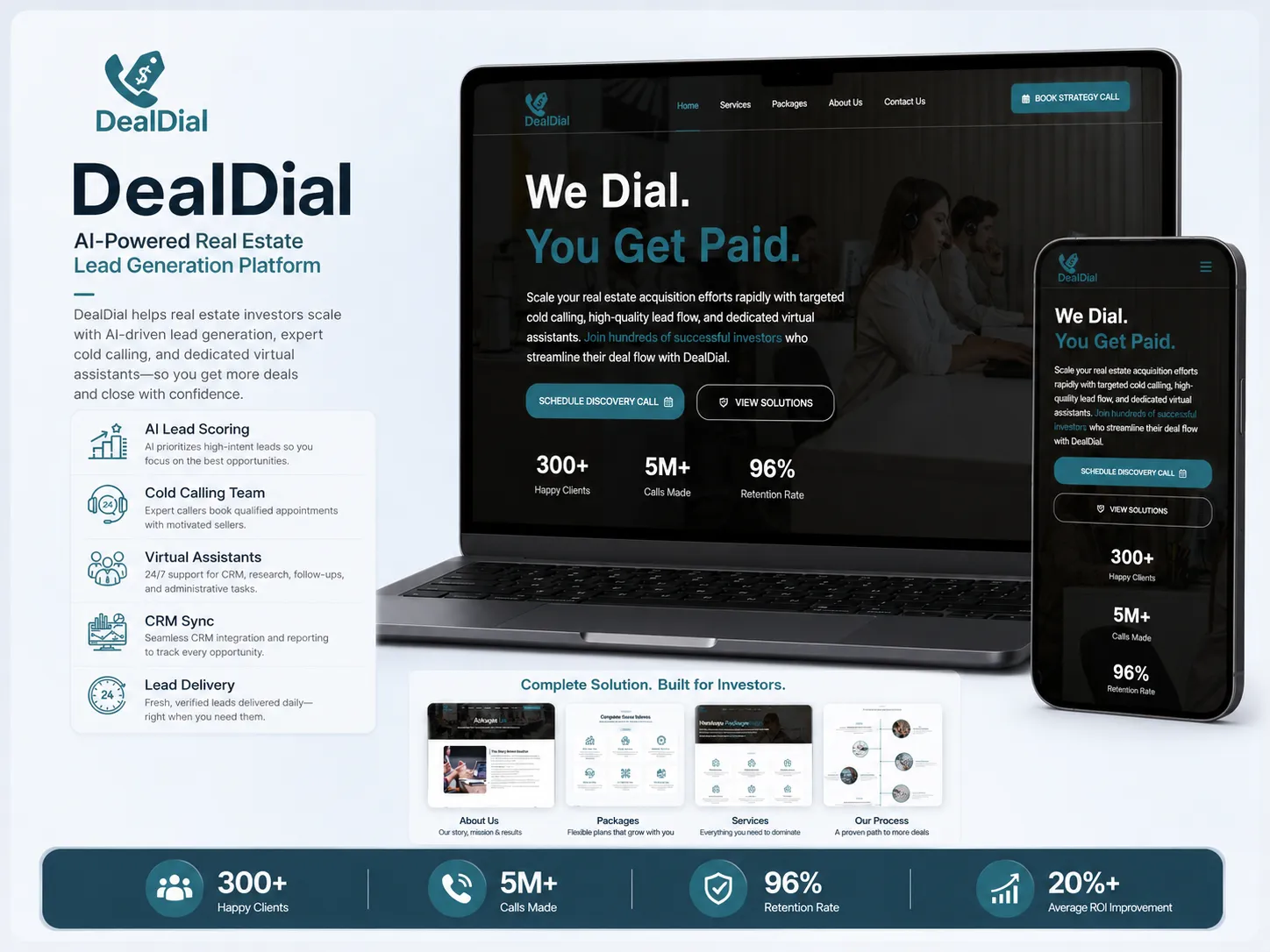
Pages architected around a clear decision path, with each section answering a useful question and the primary actions kept consistent. DealDial applied this approach to explain a multi-part offer through one coherent story.
02

Corporate & service-business websites

A clear structure for companies with real services to explain — positioning, service pages, trust sections, and contact flows that route enquiries to the right place.

03

Bilingual Arabic/English platforms

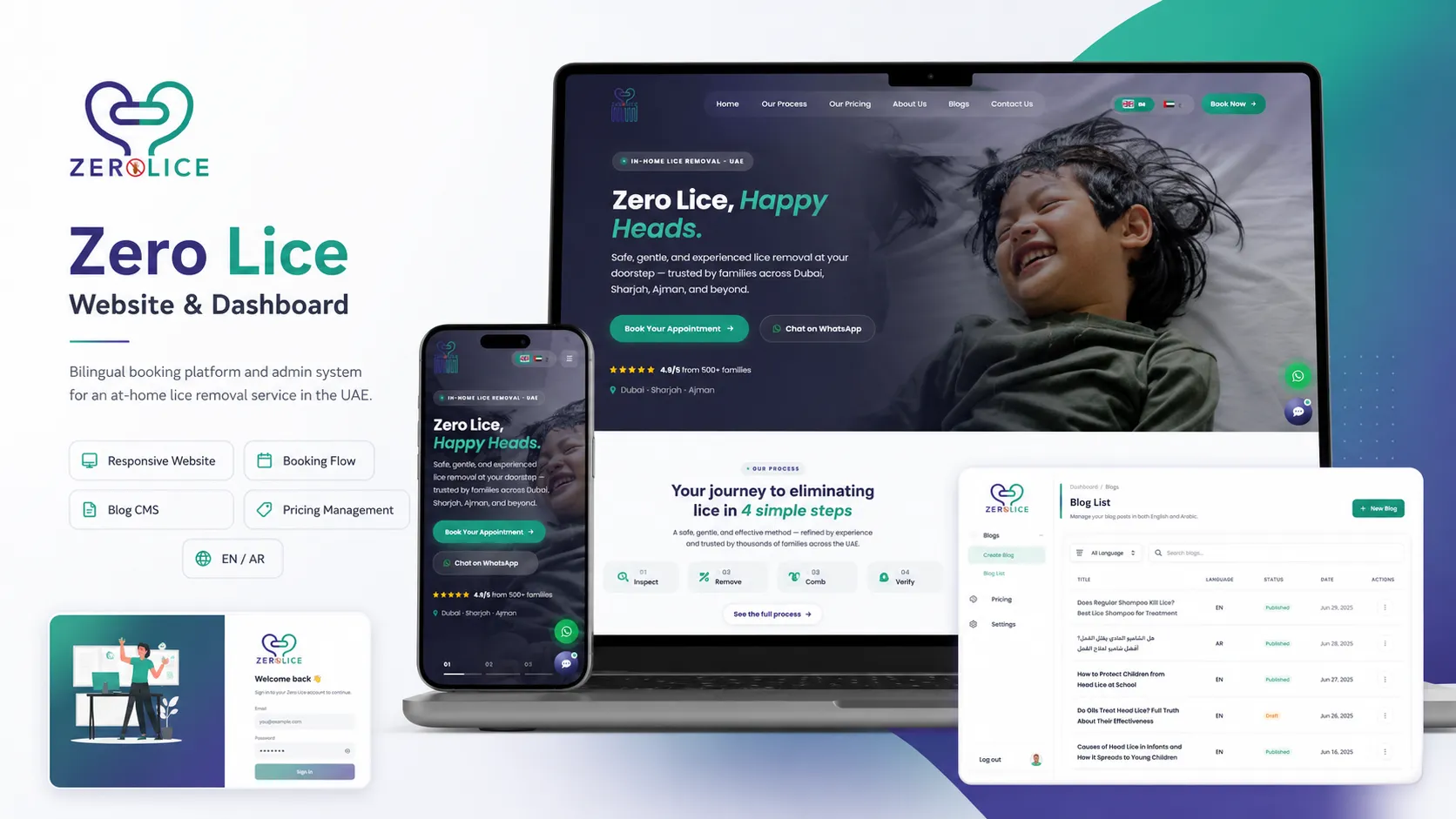
Both languages designed together, not translated after the fact: RTL-mirrored layouts, intentional Arabic typography, and locale-aware routing. Zero Lice applied this approach across its English and Arabic customer journeys.

04

Content-managed sites & blogs

A headless CMS feeding pages, posts, and offers so the content team can publish without coupling routine editorial changes to the deployment cycle.

03 / What the engagement can include

What you get

  • Message and page architecture built around your conversion goal
  • A design system matched to the brand, content, and agreed scope
  • Next.js build with server-side rendering and performance-aware delivery
  • Full bilingual EN/AR support with proper RTL when you need it
  • Measurement setup for the agreed actions and journeys
  • Technical SEO foundations for the agreed pages: structured data, sitemaps, and metadata
  • A content workflow your team can run without a developer
  • Performance checks against agreed pages, devices, and production conditions

8 clear scope · one client-facing lead · visible progress

Technology chosen for the product

  • Next.js
  • TypeScript
  • Tailwind CSS
  • next-intl
  • Headless CMS
  • GA4 + GTM

The same architectural approach used for Zero Lice and DealDial—chosen to support discoverability, measured performance, and maintainable content workflows.

See the approach in a delivered productZero Lice

04 / How the work moves

How it ships

  1. 1Step 01

    Positioning before pixels

    We define who the site convinces and of what. The competitive landscape, the one-sentence promise, and the page architecture come before any design.

  2. 2Step 02

    Design around the message

    A visual direction that carries the brand, structured so every section earns its place in the conversion path. You review real pages, not abstract mockups.

  3. 3Step 03

    Build for speed and search

    Next.js with SSR, optimized images, structured data, and the content workflow connected—technical foundations that support discoverability and can be verified against agreed performance targets.

  4. 4Step 04

    Launch, measure, iterate

    Measurement is configured around the actions that matter to the agreed journey. After launch, observed behavior can inform which part of the experience deserves the next iteration.

06 / Practical answers

What clients usually need to know before we start.

Your Next Decision

Have a website in mind? Let’s define it.

Tell me what you are building, where the work stands now, and what success should look like. We can use that context to identify the first decision worth making.

How long does a website take?

The schedule depends on page count, language support, content readiness, integrations, and the approval path. Discovery turns those variables into a written scope, milestones, and project-specific timeline before delivery begins.

Do you write the content too?

The structure and messaging, yes—they are central to the work. I define the page architecture, headlines, and conversion-copy direction with you. Final wording is refined together, and for bilingual sites both languages are treated as originals, not translations.

Will I be able to update the site myself?

Yes. Content-managed builds use a headless CMS, so your team edits pages, posts, offers, and pricing without touching code or waiting on a deploy.

What about SEO?

The technical foundations can include server-side rendering, structured data, clean URLs, sitemaps, and metadata. Performance is tested against the agreed pages and device conditions; search visibility still depends on content, competition, authority, and ongoing work beyond the build itself.